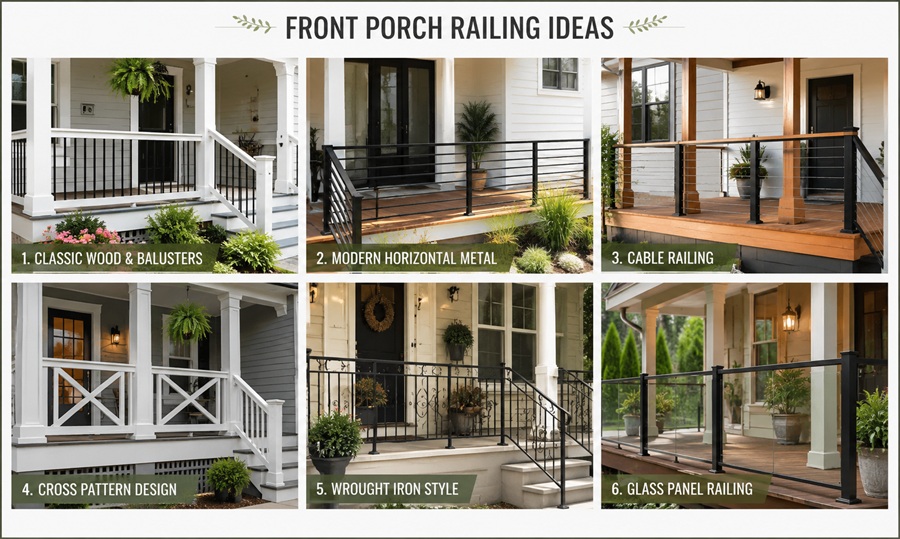
The best front porch railing ideas balance your home’s architectural style with practical concerns like durability, code compliance, and maintenance. Wood railings suit traditional and farmhouse homes, black metal and cable railings work well for modern exteriors, and composite materials offer a low-maintenance option across styles. This guide walks through the most popular railing materials, styles, and what to consider before choosing one for your home.
Popular Porch Railing Materials Compared
| Material | Look | Maintenance | Approx. Cost per Linear Ft. |
| Wood | Classic, warm | High (staining/painting) | $15 – $35 |
| Composite | Wood-like, uniform | Low | $25 – $45 |
| Metal (wrought iron/aluminum) | Modern or traditional | Low to moderate | $20 – $50 |
| Cable railing | Sleek, minimal | Low | $40 – $70 |
| Vinyl/PVC | Clean, uniform | Very low | $15 – $30 |
Pricing varies by region, railing height, and complexity of installation, particularly on porches with stairs or non-standard angles.
Wood Porch Railing Ideas
Wood remains the most classic choice for front porch railings, especially on farmhouse, colonial, and craftsman-style homes. Simple square balusters painted white offer a timeless look, while turned or decorative balusters add more traditional detail for Victorian or colonial-style homes. Wood requires the most upkeep of the common materials, typically needing repainting or restaining every 2 to 5 years depending on climate exposure, but it remains popular because of the warmth and character it brings to a porch.
Metal Porch Railing Ideas
Black metal railings have become one of the most requested styles in recent years, working equally well on modern farmhouse, craftsman, and contemporary homes. Wrought iron offers more ornate, traditional detailing, often seen on historic or Southern-style homes, while powder-coated aluminum provides a cleaner, more minimal look with less maintenance than traditional iron. Metal railings hold up well to weather and generally require less frequent maintenance than wood, mostly limited to occasional rust spot touch-ups on iron railings.
Cable Railing for a Modern Porch
Cable railing systems use horizontal steel cables strung between posts instead of traditional balusters, creating a sleek, minimal look that has grown popular on modern and mid-century style homes. Beyond the aesthetic, cable railings preserve views and let more natural light reach the porch since there’s less visual obstruction than traditional baluster designs. They tend to cost more than wood or standard metal options due to the tensioning hardware required, but many homeowners find the low maintenance and modern look worth the investment.
Composite and Vinyl Railing Options
Composite and vinyl railings appeal to homeowners who want a specific look without ongoing maintenance. Composite materials, made from a blend of wood fibers and plastic, mimic the appearance of painted or stained wood while resisting rot, warping, and the need for repainting. Vinyl railings offer a similarly low-maintenance profile at a typically lower price point, though the look tends to be more uniform and less textured than composite or real wood.
These materials work particularly well in climates with significant humidity, rain, or temperature swings, where wood railings would otherwise need more frequent attention.
Farmhouse Porch Railing Ideas
Farmhouse-style porch railings typically combine simple wood or composite balusters with black metal accents, like a black metal top rail paired with white painted posts. Horizontal railing designs, using wide flat boards instead of individual balusters, have also become popular within the farmhouse aesthetic for their clean, understated look. Pairing the railing with a matching porch swing or rocking chairs in a complementary finish helps tie the whole exterior look together.
Modern Porch Railing Ideas
Modern porches lean toward clean lines and minimal ornamentation, which is why cable railing and simple black metal designs dominate this style. Horizontal wood slat railings, similar to the wood slat trend seen in interior design, have also gained popularity for modern exteriors, offering warmth without the more traditional look of vertical balusters. Keeping the color palette simple, typically black, white, or natural wood tones, reinforces the modern aesthetic more than adding multiple contrasting materials.
Porch Railing Height and Code Requirements
Most building codes require a porch railing at least 36 inches high if the porch is more than 30 inches above grade, though some local codes require 42 inches for certain configurations. Baluster spacing is also regulated in most jurisdictions, typically requiring gaps no wider than 4 inches to prevent a small child from slipping through. Always check your local building code before finalizing a railing design, since requirements vary by municipality and older homes may be grandfathered under different standards than new construction.
DIY Porch Railing Installation
Installing a basic wood or composite railing system is a feasible DIY project for homeowners comfortable with basic carpentry, particularly with pre-made railing kits that include pre-cut balusters and hardware. More complex installations, like cable railing systems that require precise tensioning, or any railing on a porch with unusual angles or stairs, are often better left to a professional to ensure both a clean look and code compliance.
Maintaining Your Porch Railing by Climate
Climate plays a significant role in how well different railing materials hold up over time. In humid, coastal regions, wood railings are more prone to rot and mildew and typically need more frequent sealing or staining, while metal railings need regular checks for rust, particularly where the coating may have chipped from everyday wear. In dry, sun-intense climates, vinyl and composite railings can fade or become slightly brittle over many years of UV exposure, so choosing a product specifically rated for high UV resistance matters more in these regions.
Cold climates with regular freeze-thaw cycles put additional stress on wood joints and can cause cracking if the wood wasn’t properly sealed before winter. Metal railings generally perform well in cold weather, though it’s worth checking that any exposed hardware is rated for outdoor use to prevent corrosion from de-icing salt if your porch is near a walkway that gets treated in winter.
Pairing Railing Style With Your Front Door and Trim
A porch railing looks most cohesive when it echoes at least one other exterior element, whether that’s matching the color of your front door trim, mirroring a black metal light fixture, or using a wood tone that complements your porch flooring. Homes with a black front door often pair naturally with black metal railing for a coordinated look, while a wood front door tends to look better with a wood or composite railing in a similar or complementary tone rather than introducing an unrelated material.
Frequently Asked Questions
What is the most low-maintenance porch railing material?
Vinyl and composite railings require the least maintenance since they resist rot, don’t need repainting, and hold up well to weather exposure over many years.
What height does a porch railing need to be by code?
Most codes require a minimum height of 36 inches for porches more than 30 inches above grade, though some jurisdictions require 42 inches, so it’s worth checking local requirements.
Is cable railing more expensive than traditional railing?
Yes, cable railing systems generally cost more than standard wood or metal railings due to the tensioning hardware, though many homeowners find the modern look and low maintenance worth the price difference.
Can I install a porch railing myself?
Basic wood or composite railing kits are DIY-friendly for those with some carpentry experience, but more complex systems like cable railing or installations involving stairs are often better handled by a professional.
