
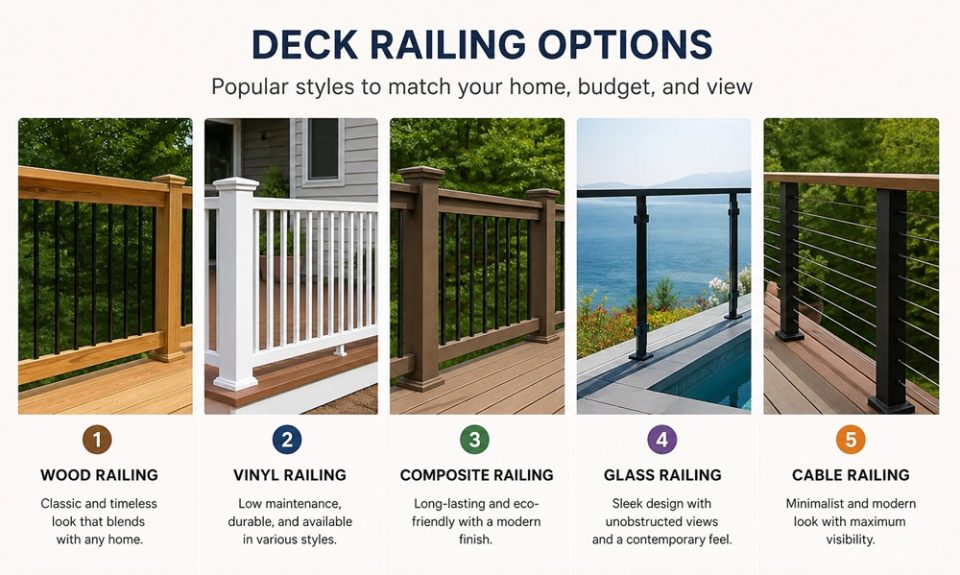
Deck railing options fall into five main categories: wood, metal, cable, glass, and composite. Costs range from about $15 per linear foot for basic wood to $50 or more per linear foot for glass or high-end cable systems, with material choice affecting both upfront cost and long-term maintenance.
Railing Material Cost Comparison
| Material | Cost per Linear Foot | Maintenance Level |
| Wood | $15-$30 | High – regular staining or sealing |
| Aluminum | $25-$40 | Low |
| Vinyl | $20-$35 | Low |
| Cable | $30-$50 | Medium – periodic tension checks |
| Composite | $25-$45 | Low |
| Glass | $40-$70 | Medium – frequent cleaning |
These are installed costs including labor for a standard deck railing run; exact pricing shifts based on region, railing height, and how much custom fabrication is involved.
Wood Railing Options
Wood remains the most budget-friendly choice and pairs naturally with wood decking, but it needs the most upkeep. Pressure-treated pine is the cheapest option but requires staining or sealing every one to two years to prevent rot and splintering. Cedar and redwood cost more upfront but resist decay better than pine, stretching maintenance intervals out somewhat.
Aluminum and Metal Railing
Aluminum railing holds up well against rust, doesn’t need repainting, and comes in a range of styles from traditional baluster designs to sleek, modern horizontal lines. It’s a strong middle-ground option: more durable than wood, generally less expensive than glass or cable, and available in colors that can match or complement most home exteriors.
Cable and Glass Railing
Cable railing uses horizontal stainless steel cables strung between posts, giving decks a modern, minimal look while keeping sightlines mostly unobstructed. It’s popular on decks with a view, since it blocks less of the scenery than a solid railing would. Glass panel railing offers the clearest view of any option and is popular for decks overlooking water or mountains, but it’s the most expensive option here and needs more frequent cleaning to stay looking clear.
Vinyl Railing as a Budget-Friendly Alternative
Vinyl railing sits between wood and aluminum in terms of both cost and appearance. It won’t rot, splinter, or need staining, which makes it appealing for homeowners who want low maintenance without the higher price tag of composite or aluminum. The main downside is that vinyl can become brittle in extreme cold and may yellow slightly over many years of sun exposure.
Composite Railing
Composite railing, made from a blend of wood fibers and plastic, is designed to match composite decking and requires very little maintenance beyond occasional washing. It resists rot, warping, and insect damage far better than wood, and doesn’t need staining or sealing at any point.
Matching Railing Style to Home Architecture
A railing that clashes with a home’s architectural style can make an otherwise well-built deck look mismatched. Traditional homes with classic trim details generally pair well with wood or a simple white vinyl railing with vertical balusters. Modern homes tend to look better with horizontal cable or minimal aluminum railing, which echoes the clean lines common in that style.
Are There Height Requirements for Deck Railings?
Most U.S. building codes require deck railings to be at least 36 inches tall for residential decks, increasing to 42 inches for commercial applications. Baluster spacing is also regulated, typically requiring gaps no wider than 4 inches to prevent a small child from slipping through. Always check local building codes before finalizing a railing choice, since requirements vary somewhat by state and municipality.
Long-Term Maintenance at a Glance
| Material | Expected Lifespan | Yearly Upkeep |
| Wood | 10-15 years | Re-stain or seal every 1-2 years |
| Aluminum | 20+ years | Occasional rinse |
| Composite | 20-25 years | Occasional rinse |
| Cable | 20+ years | Annual tension check |
| Glass | 15-20 years | Frequent cleaning |
Recommendations by Budget and Style
For a tight budget with rustic style, pressure-treated wood remains the practical choice, provided you’re willing to maintain it. For a balance of durability and cost, aluminum or composite railing offers the best long-term value. For a modern deck with a view worth showing off, cable or glass railing delivers the cleanest sightlines, at a higher price point that reflects the upgrade.
Installation Considerations
DIY installation is realistic for wood, vinyl, and some aluminum kit systems, particularly for homeowners comfortable with basic tools and a level. Cable and glass railing systems generally require professional installation, since tensioning cables correctly and safely mounting glass panels both call for specialized tools and experience. Factor installation complexity into the overall cost comparison, since a material with a lower sticker price can end up costing more once specialized labor is added in.
