
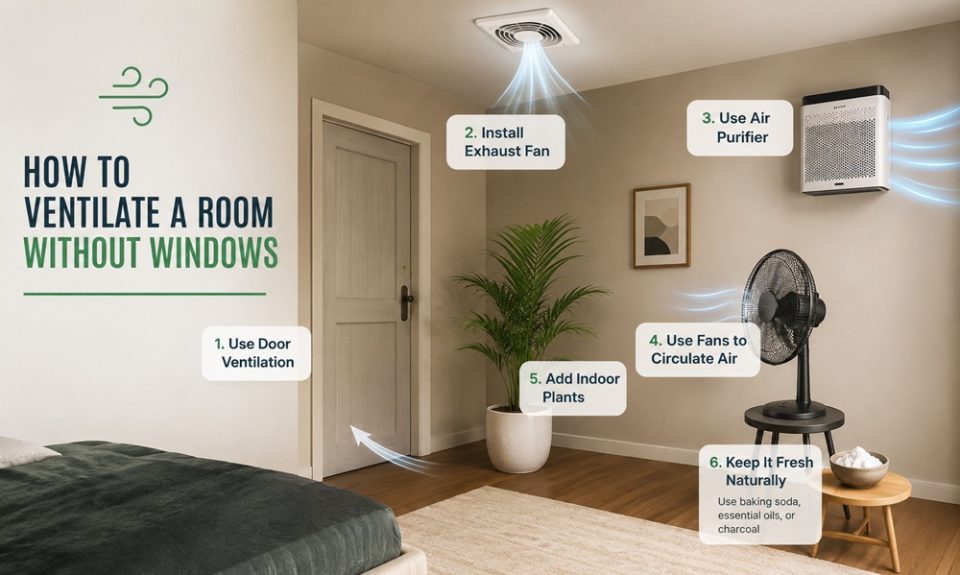
You can ventilate a room without windows by installing an exhaust fan vented to the outside, using a portable air purifier with a HEPA filter, running a dehumidifier to control humidity, adding a door vent or louvered door to allow airflow from adjacent rooms, or installing a small ductless ventilation system. Combining two or three of these methods works better than relying on a single fix, especially in rooms used daily like windowless bathrooms or basements.
Windowless rooms tend to develop stale air, humidity buildup, and odor problems faster than rooms with natural airflow. Here are the most effective and practical solutions, starting with the easiest.
Beginner Overview of Ventilation Options
The most straightforward fix for a windowless room is mechanical ventilation, meaning a fan or vent system that actively moves air rather than relying on natural airflow that doesn’t exist without windows. Beyond mechanical solutions, controlling humidity and adding air purification both help address the stuffiness and odor issues that windowless rooms commonly develop.
Exhaust Fan Installation
An exhaust fan vented to the outside is one of the most effective solutions for windowless bathrooms, laundry rooms, or interior rooms near an exterior wall. These fans pull stale, humid air out of the room and vent it outdoors, which is especially important in bathrooms where moisture buildup can lead to mold if left unaddressed. Installation typically requires cutting through to an exterior wall or roof for the vent duct, so this option often requires a licensed electrician or HVAC contractor, particularly if wiring for a new fan circuit is needed.
Windowless Bathroom Ventilation
Bathrooms without windows face the added challenge of trapped moisture from showers and baths, making ventilation more urgent than in a windowless bedroom or office. An exhaust fan is close to essential in this scenario, ideally one rated for the room’s square footage and run for at least 20 to 30 minutes after showering to fully clear humidity. Pairing the fan with a door vent, which allows some air exchange with the hallway, provides a secondary path for stale air to escape even when the fan isn’t running.
Air Purifiers for No-Window Rooms
An air purifier with a HEPA filter doesn’t create airflow to the outside the way a fan does, but it does continuously filter the air within the room, removing dust, allergens, and some odors. This works well as a supplement to mechanical ventilation, particularly in bedrooms or offices where installing an exhaust fan isn’t practical or necessary.
Dehumidifier for a Stuffy Room
Humidity is one of the biggest contributors to that stale, stuffy feeling in windowless rooms, particularly basements. A dehumidifier actively removes moisture from the air, which reduces musty odors and helps prevent mold growth in rooms that don’t get natural airflow to dry out excess humidity on their own.
Common Mistakes to Avoid
A common mistake is relying only on a door left ajar for airflow, which provides minimal actual ventilation compared to a dedicated fan or vent system, especially in rooms generating significant moisture like bathrooms. Another mistake is ignoring humidity control entirely and focusing only on odor, when humidity is often the underlying cause of both musty smells and potential mold problems.
People also sometimes install an exhaust fan but forget to vent it properly to the outside, instead venting it into an attic or crawlspace, which can create moisture problems in those spaces instead of solving the original issue.
Can You Install a Window Fan Without a Window?
No, window fans specifically require a window opening to function, since they’re designed to sit within a window frame and use the opening for airflow. For windowless rooms, a wall-mounted or ceiling-mounted exhaust fan is the equivalent solution, requiring installation through a wall or ceiling rather than a window frame.
Should You Use a Dehumidifier for a Windowless Room?
Yes, particularly for basements, interior bathrooms, or any windowless room prone to humidity buildup. A dehumidifier addresses the moisture side of poor ventilation even when active airflow to the outside isn’t feasible, and many models include auto-shutoff and humidity sensors that make them low-maintenance once installed.
Ductless Ventilation Options
For rooms where running ductwork to an exterior wall isn’t feasible, ductless ventilation systems that filter and recirculate air, sometimes combined with small in-line fans, can improve air quality without requiring a full duct installation. These systems aren’t as effective as true exterior venting but offer a middle-ground solution for rooms with limited renovation options, such as interior closets converted into small offices or storage rooms with frequent use.
Putting It Together
For most windowless rooms, combining an exhaust fan or ductless ventilation system with a dehumidifier and, where appropriate, an air purifier addresses the airflow, humidity, and air quality issues together rather than relying on a single fix. Starting with humidity control is often the fastest way to notice improvement, since it directly addresses the musty, stagnant feeling most windowless rooms develop over time.
Ventilating a Windowless Home Office
Windowless home offices present a slightly different challenge than bathrooms, since the concern is usually stale air and reduced focus over long work sessions rather than moisture buildup. A combination of a small circulating fan, a HEPA air purifier, and a door vent or louvered door for passive airflow tends to work well for this scenario, without requiring the more involved installation of an exterior-vented exhaust fan.
Adding a plant or two can offer a modest air quality benefit as well, though it’s a supplement to mechanical ventilation rather than a replacement for it, since plants alone don’t move enough air to meaningfully address a truly stagnant room on their own.
Basement Ventilation Considerations
Basements without windows face a combination of the challenges seen in both bathrooms and home offices: moisture from the ground and surrounding soil, plus stale, trapped air from limited natural airflow. A dedicated dehumidifier sized for the basement’s square footage is often the single most impactful addition, since basement humidity is typically the root cause of both musty odors and long-term mold risk.
Pairing a basement dehumidifier with a ducted exhaust fan or an energy recovery ventilator, which exchanges stale indoor air with fresh outdoor air while retaining conditioned temperature, offers the most complete solution for basements used regularly as living space rather than just storage.
When to Call a Professional
If a windowless room continues to feel damp, develop mold, or produce persistent odors after trying fan and dehumidifier solutions, it’s worth having an HVAC professional assess whether the room needs a dedicated ventilation duct tied into your home’s existing HVAC system, which offers a more permanent and thorough solution than standalone appliances.
