
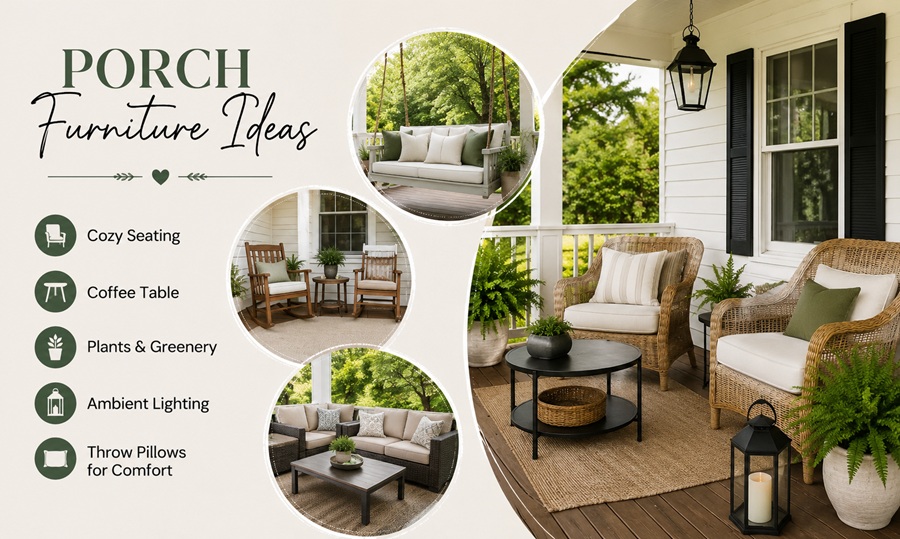
The most popular porch furniture combinations include a pair of rocking chairs with a small side table, a porch swing with hanging chains rated for outdoor use, or a compact bistro set for smaller entryways. Material matters as much as style — synthetic wicker, powder-coated metal, and rot-resistant woods like teak or cedar hold up far better than untreated wood or standard indoor upholstery.
Porch furniture takes more weather exposure than backyard patio furniture in many cases, since covered porches still deal with humidity, temperature swings, and indirect sun, so material choice deserves as much thought as style.
The right furniture also shapes how a porch actually gets used. A porch with comfortable, well-arranged seating tends to become a genuine extension of daily living space — a spot for morning coffee or evening conversation — while a porch with mismatched or uncomfortable furniture often ends up serving as little more than a pass-through to the front door.
Checklist: What to Look for in Weatherproof Porch Furniture
Prioritize furniture with rust-resistant hardware, UV-resistant cushion fabric (look for solution-dyed acrylic rather than standard cotton blends), and frames made from synthetic wicker, powder-coated aluminum, or naturally rot-resistant wood like teak, cedar, or eucalyptus.
Check the weight rating for hanging swings and gliders, and confirm any cushions are removable and washable, since even covered porches expose furniture to dust, pollen, and occasional wind-blown rain.
Consider how much direct sun the porch gets throughout the day, since even UV-resistant fabrics fade faster under constant direct exposure than in a shaded, covered area. If your porch faces south or west with little roof coverage, prioritizing the most fade-resistant fabric options available is worth the extra cost.
Layout Ideas for Small Porches
For porches under 100 square feet, a pair of compact rocking chairs with a small round side table between them creates a classic, functional seating area without overwhelming the space. A single bench with a small side table works well for even tighter porches, offering seating without requiring much floor space.
Vertical storage, like a slim plant stand or wall-mounted planter, adds greenery without eating into limited floor space on a small porch.
For very narrow porches — less than 5 feet deep — consider foldable or stackable chairs that can be tucked to one side when not in use, keeping the walkway to the front door clear while still allowing for seating when guests arrive.
Layout Ideas for Large Porches
Larger porches can support distinct zones: a conversation area with a small loveseat or two chairs facing each other, a separate swing or glider further down the porch, and a dining-style bistro set near one end for morning coffee or casual meals. Rugs designed for outdoor use help visually define these zones without adding maintenance burden.
Avoid pushing all the furniture against the house wall, which can make even a large porch feel underused. Floating a seating group slightly away from the wall, similar to indoor furniture arrangement, creates a more intentional layout.
For wraparound porches, breaking the furniture into two or three distinct groupings along different sections encourages actual use of the entire space, rather than everyone gravitating toward a single cluster near the front door while the rest of the porch sits empty.
Budget to High-End Porch Furniture Picks
Budget-friendly options ($50 to $200 per piece) typically include basic powder-coated metal chairs or simple wood benches without cushions. Mid-range options ($200 to $600 per piece) often include synthetic wicker sets with weather-resistant cushions and better hardware durability. High-end porch furniture ($600 and up per piece) includes teak furniture sets, designer swings with premium upholstery, and modular seating systems built specifically for long-term outdoor exposure.
A porch swing typically runs $150 to $500 for the swing itself, not including the cost of a stand if it’s not being hung from the porch ceiling, which adds another $100 to $300.
When comparing prices across tiers, pay close attention to warranty terms on cushion fabric and frame materials, since outdoor furniture warranties vary widely — some cover fading and rust for just one year, while premium brands may offer three to five years of coverage on frames and hardware.
Maintenance Tips for Porch Furniture
Bring cushions inside or store them in a weatherproof bin during extended periods of rain or extreme heat to extend their lifespan. Wipe down metal furniture periodically to prevent rust from forming at joints and hardware, especially in humid climates.
For wood furniture, apply a protective sealant annually, even for naturally rot-resistant woods like teak or cedar, to maintain their color and prevent graying from sun exposure over time.
At the start of each season, check all hardware — bolts, hinges, and swing chains — for looseness or corrosion, since outdoor furniture experiences more expansion and contraction from temperature swings than indoor pieces, which can gradually loosen fasteners over time.
Frequently Asked Questions
What furniture material lasts longest on a porch?
Synthetic wicker and powder-coated aluminum tend to hold up longest with minimal maintenance, while natural woods like teak also perform well but require occasional sealing.
Do I need to cover porch furniture if it’s already covered?
Covered porches still expose furniture to humidity, indirect rain, and temperature swings, so weather-resistant materials are still worth prioritizing even under a roof.
How much weight can a porch swing hold?
Most standard porch swings are rated for 500 to 800 pounds total, but always check the specific product rating and confirm your ceiling or stand structure can support that weight before installation.
