
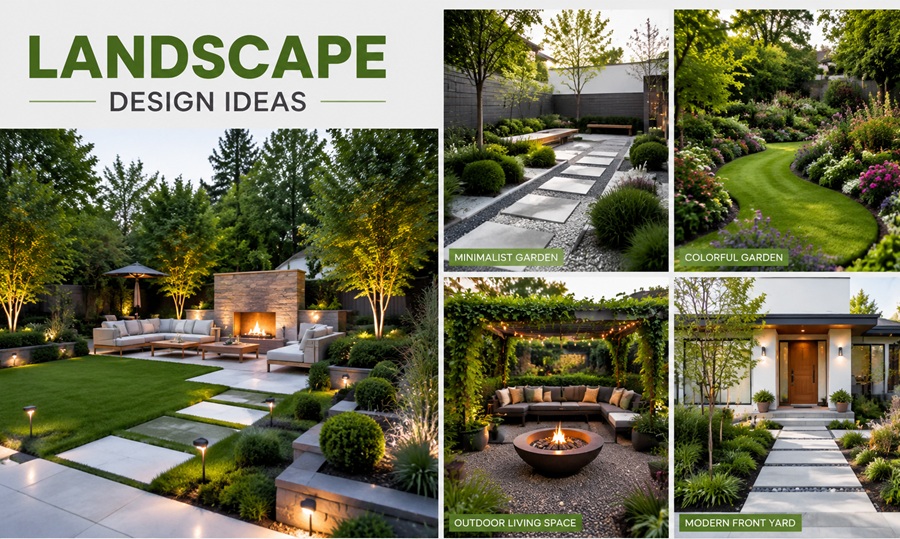
Design the Yard Around How You Actually Live, Not How It Photographs
It’s easy to end up with a yard that looks great in photos and gets used twice a year. The most successful landscape designs start from a household’s actual habits — where the kids play, where the dog runs, where dinner actually gets eaten in summer — rather than a Pinterest board built around someone else’s lifestyle.
| Quick Answer
Effective landscape design balances function and beauty: define clear zones for lawn, planting, and outdoor living, choose plants suited to your climate and maintenance tolerance, and anchor the space with at least one hardscape feature like a patio or defined path. Layered planting heights create visual depth without adding upkeep. |
Start With Zones, Not Plants
Before choosing a single plant, map out how the yard’s square footage will actually be divided: a dining or lounge area, a play or pet zone, planting beds, and any utility space for storage or gardening. Committing to zones first prevents the common problem of a yard that’s all lawn with decorative edges and no real destination.
- Walk the yard at different times of day to note sun and shade patterns
- Sketch rough zones on paper before buying anything
- Leave at least one zone flexible for future changes as family needs shift
- Position outdoor living zones near an entry point for easy indoor-outdoor flow
Layered Planting for Depth Without Extra Work
A planting bed with a single height of shrub reads flat no matter how healthy the plants are. Layering three heights — a tall backdrop shrub or small tree, mid-height perennials, and a low groundcover or edging plant — creates visual depth that looks intentional and full without requiring more total plants than a flat bed.
| Layer | Typical Height | Example Plant Types |
|---|---|---|
| Backdrop | 6+ feet | Ornamental trees, tall shrubs, hedging |
| Mid-layer | 2–4 feet | Perennials, flowering shrubs, ornamental grasses |
| Groundcover | Under 12 inches | Creeping thyme, sedum, low grasses |
Low-Maintenance Doesn’t Mean Low-Impact
Native and drought-tolerant plants have shifted from a niche preference to a mainstream default in most regions, largely because they need less water, less fertilizer, and less ongoing intervention once established. Choosing species native to your specific region also tends to support local pollinators far better than imported ornamentals.
- Check your USDA hardiness zone or regional equivalent before selecting any plant
- Prioritize native species for at least 60 to 70 percent of the planting plan
- Group plants with similar water needs together to simplify irrigation
- Mulch beds generously to reduce weeding and retain soil moisture
| Tip: Group high-maintenance specimen plants near the house or a frequently used path, where you’ll actually notice and tend to them, rather than scattering them across the whole yard. |
Hardscape: The Bones of the Design
Patios, paths, and retaining walls do more to make a yard feel finished than planting alone ever will. A single well-placed patio or gravel seating area gives the eye a destination and gives the household an actual reason to spend time outside.
- Pavers offer more design flexibility than poured concrete and are easier to repair piecemeal
- Gravel patios cost less and drain well, though they need occasional raking and refreshing
- Curved paths read as more relaxed and garden-like; straight paths suit formal, symmetrical layouts
- Include a defined edge between lawn and beds to reduce grass creep and simplify mowing
Front Yard vs. Backyard Priorities
| Yard Area | Primary Goal | Common Features |
|---|---|---|
| Front yard | Curb appeal, welcoming entry | Defined walkway, foundation planting, low hedges |
| Backyard | Everyday living and privacy | Patio, privacy screening, play or garden zones |
| Side yard | Utility and transition | Storage, compost, narrow planting strips |
Lighting Extends the Season
Landscape lighting is one of the most underused ways to get more use out of a yard, particularly path lights along walkways and uplighting on a specimen tree or architectural feature. Even a modest lighting plan can turn a yard that’s only used during the day into one that gets used well into the evening.
Frequently Asked Questions
- How do I start a landscape design if I have no experience?
Begin by mapping how you actually use the yard and where sun and shade fall throughout the day, then work outward from those functional zones before choosing individual plants.
- What’s the most low-maintenance landscaping approach?
Prioritizing native, drought-tolerant plants grouped by water needs, combined with generous mulching, significantly reduces watering, weeding, and general upkeep.
- Do I need a professional landscape designer?
For a full redesign involving grading, drainage, or hardscape structures, a professional often saves money by avoiding costly mistakes; for planting refreshes alone, many homeowners manage well with some research.
- How much should I budget for a backyard patio?
Costs vary widely by material and size, but gravel patios tend to be the most budget-friendly option, while natural stone paver patios sit at the higher end.
- What plants work well in both sun and partial shade?
Many hostas, ferns, and heuchera varieties tolerate a range of light conditions, though it’s still worth checking specific cultivar requirements for your exact zone.
Bringing It Together
A yard that gets used regularly almost always started with a plan built around real habits, not just visual appeal. Define your zones, layer your planting for depth, anchor the space with at least one hardscape feature, and the result tends to look better in person than any single Pinterest board ever could.
