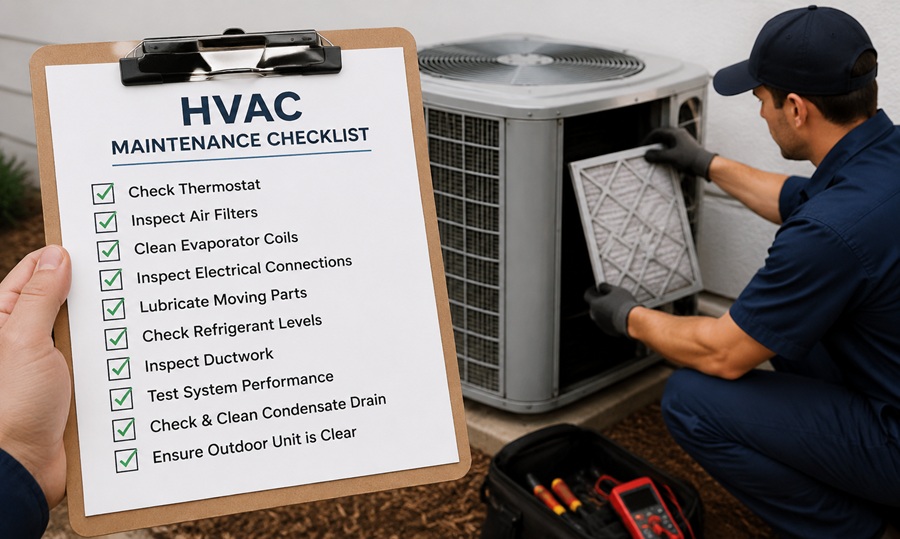
Why a Checklist Beats Reactive Repairs
Most HVAC failures don’t happen out of nowhere. A clogged filter straining a blower motor, a dirty coil reducing efficiency, or a neglected outdoor unit choked with debris are all slow-building problems that show up as a sudden breakdown months later. A regular checklist catches these issues while they’re still cheap, five-minute fixes.
Monthly Tasks
- Check the air filter and replace it if visibly dirty, typically every 1 to 3 months
- Confirm the thermostat is reading accurately against a separate room thermometer
- Listen for unusual noises during system startup and shutdown
- Check that vents and returns throughout the home are unobstructed by furniture or rugs
Seasonal Tasks
Spring (Before Cooling Season)
- Clean or replace the air filter regardless of its last change date
- Clear leaves, grass clippings, and debris from around the outdoor condenser unit
- Check that the condensate drain line is clear and draining properly
- Schedule a professional tune-up to check refrigerant levels and electrical connections
Fall (Before Heating Season)
- Replace the air filter before the first heavy use of the furnace
- Test carbon monoxide detectors near sleeping areas and the furnace itself
- Inspect visible ductwork for loose connections or gaps
- Schedule a professional furnace inspection, particularly for gas systems
| Task | Frequency | DIY or Professional |
|---|---|---|
| Filter replacement | Every 1–3 months | DIY |
| Condenser unit clearing | Seasonally | DIY |
| Coil cleaning | Annually | Professional recommended |
| Refrigerant level check | Annually | Professional |
| Ductwork inspection | Annually | DIY visual, professional for repairs |
| Thermostat calibration | As needed | DIY or professional |
| Warning: Never attempt to service refrigerant lines yourself. Handling refrigerant requires EPA certification, and improper handling can damage the system or pose a safety risk. |
Annual Professional Tune-Up: What It Should Include
- Full inspection of electrical connections and capacitors
- Refrigerant charge check and adjustment if needed
- Coil cleaning for both indoor and outdoor units
- Blower motor and belt inspection
- Thermostat calibration and system cycle testing
Signs Your System Needs Attention Sooner
- Uneven temperatures between rooms that weren’t previously a problem
- A noticeable increase in energy bills without a change in usage habits
- Short-cycling, where the system turns on and off more frequently than usual
- Unusual odors when the system starts, particularly a burning or musty smell
Extending System Lifespan
Most residential HVAC systems are designed to last 15 to 20 years with consistent maintenance, though neglected systems often fail well before that mark. The cost of annual professional tune-ups is typically far lower than the cost of emergency repairs or premature full system replacement.
Frequently Asked Questions
| Question | Answer |
|---|---|
| How often should I change my HVAC filter? | Most standard filters need replacement every 1 to 3 months, though homes with pets or allergy concerns may need monthly changes. |
| Do I really need a professional tune-up every year? | Annual professional inspections catch issues like refrigerant leaks and electrical wear that aren’t visible or safely accessible during routine DIY checks. |
| What’s the average lifespan of an HVAC system? | With consistent maintenance, most systems last 15 to 20 years, though this varies based on usage intensity and climate. |
| Can I clean my outdoor condenser unit myself? | Yes, clearing debris and gently rinsing the exterior fins with a garden hose is a safe DIY task; avoid using a pressure washer, which can bend the fins. |
| What does short-cycling mean and why is it a problem? | Short-cycling refers to a system turning on and off more frequently than normal, which increases wear on components and often signals an underlying issue like a refrigerant leak or thermostat problem. |
Final Word
A consistent HVAC maintenance checklist is one of the lowest-effort, highest-return habits a homeowner can build. Monthly filter checks and seasonal outdoor unit care take minutes, and paired with an annual professional tune-up, they meaningfully reduce the odds of an expensive mid-summer or mid-winter breakdown.
