
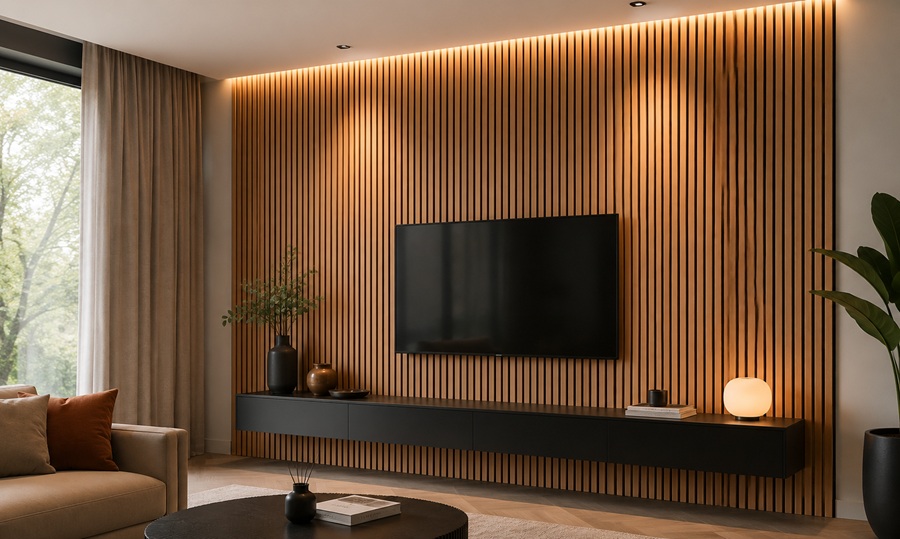
Wood acoustic wall panels combine a solid or slatted wood face with a sound-absorbing core, usually felt or acoustic foam, to reduce echo while adding a warm, finished look to a wall. On their own, solid wood does very little to absorb sound — it’s the felt or foam backing doing the acoustic work, with the wood slats acting as a decorative and diffusing surface. Panels typically run $15 to $60 per square foot installed, and a mid-sized living room or home office needs roughly 20 to 40 square feet of coverage to notice a real difference in echo.
That distinction between “wood panel” and “acoustic treatment” trips up a lot of buyers, so it’s worth clearing up before you spend money on something that looks the part but doesn’t perform.
Myth: Wood Panels Block Sound Between Rooms
This is the most common misunderstanding, and it’s a costly one if you’re trying to stop noise from traveling to a neighboring room or apartment. Wood acoustic panels absorb and diffuse sound within a room — they reduce echo and reverberation so speech and music sound clearer. They do not block or soundproof against outside noise, which requires mass, air gaps, and sealed construction, not surface treatment.
Reality: Wood Panels Improve Sound Quality Inside a Room
What wood acoustic panels actually do well is cut down on the “boomy” or “harsh” sound that hard-surfaced rooms produce. Rooms with bare walls, hardwood floors, and large windows bounce sound around, making conversations and audio playback feel muddy. Panels placed at reflection points — typically the wall behind a TV or speaker, and the wall directly across from it — noticeably tighten up how a room sounds.
What Is Acoustic Wood Actually Made Of?
Most wood acoustic panels use one of two constructions: thin wood slats mounted over a felt or fabric-wrapped acoustic core, or a solid wood veneer bonded to a perforated MDF or foam backing. The slat style is more popular for living spaces because the gaps between slats let sound pass through to the absorbent layer while still showing real wood grain on the surface.
A third, less common construction uses solid wood with a perforated or grooved face, where small machined holes or channels let sound waves reach an internal absorbent layer without any visible fabric or felt at all. This style tends to cost more due to the precision machining involved, but it gives the cleanest, most uniform wood appearance of the three approaches, with no fabric color to coordinate with the room.
Does the Type of Wood Used Affect Acoustic Performance?
Not meaningfully. Oak, walnut, ash, and other common veneer woods used on acoustic panels are typically only a few millimeters thick and serve a purely cosmetic and structural role — the acoustic performance comes almost entirely from the felt, foam, or fiber core behind the wood, not the wood species itself. Buyers choosing between wood tones should base that decision on matching existing furniture and trim, not on any expectation that one wood type absorbs sound better than another.
How Much Coverage Do You Actually Need?
For a home office or media room under 200 square feet, covering 15 to 20 percent of the wall area with panels is usually enough to notice a real difference. Home studios and rooms used for video calls or recording benefit from closer to 25 to 30 percent coverage, concentrated at first-reflection points rather than spread thin across every wall.
How To Install Wood Acoustic Panels?
Most panels mount with either French cleats, adhesive strips, or standard wall anchors, depending on weight. Lightweight slat panels under 5 pounds per square foot often work fine with heavy-duty adhesive strips, which avoids drilling into drywall. Heavier solid-wood panels should use French cleats or wall anchors rated for the panel’s full weight, since adhesive alone can fail over time, especially in warmer rooms.
- Measure and mark reflection points before mounting anything
- Test panel placement with painter’s tape outlines first
- Leave small gaps between panels for a cleaner shadow-line look
- Avoid covering more than a third of any single wall unless you’re treating a dedicated studio
Best Rooms for Wood Acoustic Panels
Home offices used for video calls benefit the most per dollar spent, since panels cut down on the echo that makes remote meetings sound distant. Media rooms and home theaters are a close second, particularly on the wall behind the screen and the side walls nearest the main seating. Living rooms with open floor plans and hard flooring also see a real improvement, even with modest coverage, because those rooms tend to have the least existing sound absorption of any space in a home.
Practical Advice Before You Buy
Check the NRC (Noise Reduction Coefficient) rating in the product listing if one is provided — anything below 0.5 is more decorative than functional. If no NRC rating is listed at all, treat the panel as primarily aesthetic and set expectations accordingly. Buyers who want genuine acoustic performance and a wood look should prioritize panels with a stated NRC over 0.7, even if the wood coverage looks thinner on the surface, since the felt or foam core is doing the real work regardless of how much wood you can see.
What Does Wood Acoustic Panel Installation Typically Cost?
Materials alone for a DIY installation covering a typical accent wall (roughly 100 square feet) usually run $1,500 to $3,500 depending on panel quality and wood species. Professional installation adds $500 to $1,500 on top of materials, mainly justified for heavier solid-wood panels or rooms with complex wall layouts where precise, level mounting is harder to achieve without experience. Buyers on a tighter budget can reasonably start with a smaller feature area — the wall behind a media console or headboard, for example — rather than a full room, since concentrated coverage at a reflection point delivers more acoustic benefit per dollar than thin coverage spread across every wall.
Is It Worth Combining Wood Panels With Other Acoustic Treatments?
For rooms with a genuine noise or echo problem — home studios in particular — combining wood panels with corner bass traps and a rug or heavier curtains typically produces better results than wood panels alone. Wood panels handle mid-to-high frequency absorption well, but low-frequency buildup in corners needs a denser, purpose-built bass trap to resolve fully. For a living room or office where the goal is simply reducing everyday echo rather than achieving studio-grade acoustics, wood panels alone are usually sufficient.
How Do You Maintain Wood Acoustic Panels Over Time?
Dust regularly with a soft, dry cloth or a vacuum brush attachment, since dust buildup in the gaps between slats or in a perforated wood surface can slightly reduce acoustic performance over years of neglect. Avoid harsh chemical cleaners on the wood face, which can strip finish and dull the grain; a slightly damp cloth is sufficient for occasional deeper cleaning. Keep panels out of direct, sustained sunlight where possible, since UV exposure fades wood tone unevenly over time, particularly noticeable on panels near a large window. With basic care, quality wood acoustic panels typically maintain both their appearance and acoustic performance for well over a decade.
Frequently Asked Questions
Do wood acoustic panels work in a bedroom?
Yes, though bedrooms typically need less coverage than media rooms or offices. A few panels placed behind the headboard wall are often enough to noticeably reduce echo in a standard bedroom.
Can you paint or stain wood acoustic panels?
Most panels come pre-finished, and refinishing isn’t recommended since it can seal the wood surface and slightly reduce sound absorption. Buy the wood tone you want upfront rather than planning to refinish later.
Are wood acoustic panels safe to install over drywall?
Yes, as long as the mounting hardware matches the panel’s weight. Lightweight panels use adhesive strips; heavier panels need wall anchors rated for the panel’s full weight to avoid pulling drywall away over time.
Do wood acoustic panels reduce echo on video calls?
Yes, this is one of their most common uses. Panels placed behind your camera position and on the wall you’re facing reduce the room reflections that make voices sound distant or hollow on calls.
