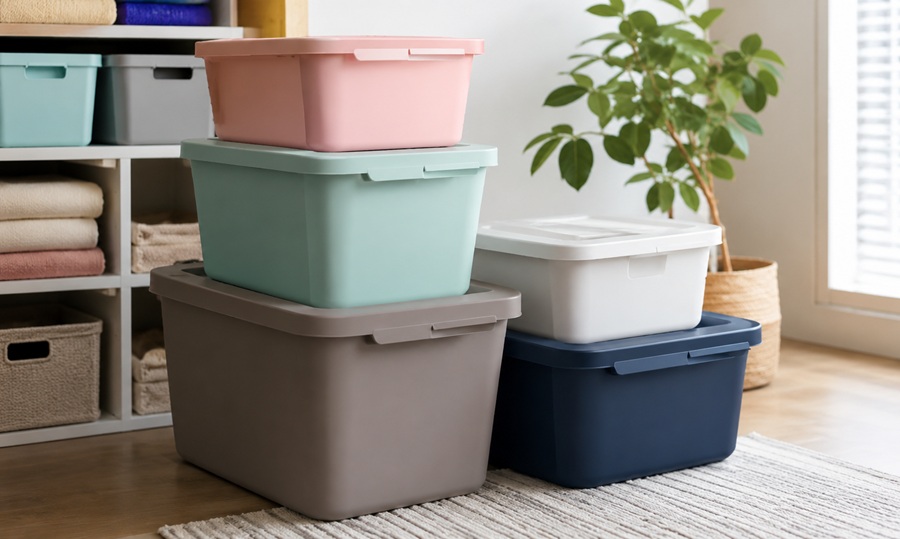
Not all plastic storage bins are made from the same material, and that’s the single biggest factor separating a bin that lasts a decade from one that cracks within a year. Polypropylene (PP) is the most common and durable option for household bins, offering flexibility that resists cracking in cold temperatures. High-density polyethylene (HDPE) shows up in heavier-duty bins and totes, valued for impact resistance. Cheaper bins sometimes use unspecified recycled blends, which is usually a sign to check the wall thickness carefully before buying.
If you’re new to buying storage bins in bulk — for a move, a garage overhaul, or a full closet system — it helps to understand what you’re actually paying for before comparing prices across brands.
Beginner’s Guide to Plastic Bin Types
Polypropylene (PP) bins are the most common on store shelves. They’re lightweight, resist cracking in cold garages or attics, and hold up well to years of stacking. Most mid-range household bins use PP.
High-density polyethylene (HDPE) bins are thicker and heavier, often used in commercial-grade totes and heavy-duty storage lines. They cost more but resist impact and heavy loads better than standard PP, making them the better choice for tools, equipment, or anything with sharp edges.
PVC-based bins are less common for general storage but show up in some decorative or fabric-hybrid bins where rigidity matters more than flex.
BPA-free labeling matters mainly for bins that will store food, kitchen items, or children’s items in direct contact — check for this specifically if that’s the use case, since not all bins are labeled by default.
Common Mistakes When Buying Plastic Storage Bins
One frequent mistake is buying based on size alone without checking the stated weight capacity, which leads to warped or cracked bins within months of heavy use. Another is choosing snap-lid bins for outdoor or garage storage, where a locking or gasket-sealed lid is necessary to keep out moisture and pests. A third common mistake is mixing bin sizes and brands within a single storage area, which prevents even stacking and wastes vertical space that uniform bins would use efficiently.
Buyers also frequently underestimate how much sunlight degrades plastic. Bins stored near a garage window or used outdoors without UV-resistant labeling will become brittle within one or two seasons, even if they were sturdy when new.
Is Recycled Plastic a Problem for Storage Bins?
Not inherently — many reputable brands use recycled PP or HDPE without sacrificing durability. The issue is that lower-cost, unbranded bins sometimes use recycled blends without consistent wall thickness, which is harder to catch without physically testing the bin. Pressing on the side wall in-store, or checking reviews for mentions of cracking, is a reasonable substitute when buying online.
How Do You Know If a Bin Will Crack Under Weight?
Wall flex is the most reliable at-home test. Press firmly on the middle of a side wall with your palm — a quality bin will resist noticeably and spring back immediately, while a bin prone to cracking under load will flex more than a few millimeters and feel almost soft. The base deserves the same test, since a thin or overly flexible base is often the first point of failure when bins are stacked and loaded from above rather than the side walls people tend to check instinctively.
Corner construction is a second useful indicator. Bins with a visible seam or thin plastic at the corners are more likely to crack there under stress than bins with a smoothly molded, slightly thicker corner radius, which distributes stacking weight more evenly.
Clear vs. Solid-Color Plastic Bins: Any Durability Difference?
Generally no meaningful structural difference exists between clear and solid-colored bins made from the same base plastic and wall thickness — the color additive doesn’t significantly change durability either way. The one exception is long-term UV exposure: darker, pigmented plastics tend to show fading and brittleness more slowly than clear or lightly tinted plastic under sustained sunlight, making solid-color bins a marginally better choice for anything stored near a garage window or used outdoors regularly.
Next Steps: Sizing Chart and Where to Use Each Type
- Small bins (5–15 gallons): desk organization, kitchen cabinets, small closets
- Medium bins (18–27 gallons): most closet and moving use, the most versatile size range
- Large bins (30–45 gallons): garage storage, seasonal decorations, bulky soft goods like linens
- Heavy-duty totes (35+ gallons, reinforced): tools, outdoor equipment, anything stored in an unheated space
How Long Should Plastic Storage Bins Last?
A mid-range polypropylene bin stored indoors and used normally should last eight to ten years without visible degradation. Bins exposed to direct sunlight, extreme temperature swings, or consistent overloading typically show cracking or warping within two to three years, regardless of original price. If a bin already feels thin or flexible when empty, that’s a reliable early sign it won’t hold up long-term.
Matching material to use case, rather than chasing the lowest price per bin, is what actually determines whether a storage system holds up. A slightly more expensive HDPE tote for the garage and a lighter PP bin for the closet will both outlast a single “do everything” bin bought without checking the material at all.
What Should First-Time Buyers Prioritize Over Everything Else?
If you’re buying storage bins for the first time and feeling overwhelmed by the number of options, weight capacity and lid type matter more than every other spec combined. A bin with an accurately stated weight rating and a lid that locks on all sides will outperform a cheaper bin with a higher gallon capacity but a flimsy snap lid, in almost every real-world storage scenario. Start there, confirm the material is PP or HDPE rather than an unlabeled blend, and the rest of the decision — color, brand, exact size — becomes far less consequential to how well the bin actually performs over time.
Where Should You Buy Plastic Storage Bins?
Big-box home and hardware stores typically stock a reliable mid-range selection in person, which is useful for the wall-flex test described above before committing to a full set. Online retailers often carry a wider range of sizes and heavy-duty options not found in physical stores, but buying online means relying on reviews and stated specs rather than hands-on testing, so it’s worth reading a handful of recent reviews specifically for mentions of cracking, lid fit, or warping before ordering in bulk. Warehouse clubs sometimes offer strong per-unit pricing on bulk sets, though the size and style options tend to be more limited than either big-box retailers or online marketplaces.
Can Plastic Storage Bins Be Recycled at End of Life?
Most polypropylene and HDPE bins are technically recyclable, but curbside recycling programs frequently reject large rigid plastics like storage bins due to sorting equipment limitations, even when the material itself is accepted in smaller items. Checking with a local municipal recycling program or a specialty plastics recycler before assuming a cracked bin can go in a standard recycling bin avoids a common source of contamination in curbside programs. Some retailers and manufacturers also run take-back programs for their own product lines, which is worth checking directly on the brand’s website if a bin has reached the end of its usable life and a standard recycling option isn’t clearly available locally.
Frequently Asked Questions
Is polypropylene or HDPE better for plastic storage bins?
Polypropylene is lighter and resists cold-weather cracking, making it a solid all-purpose choice. HDPE is heavier and more impact-resistant, better suited to tools or equipment that take rougher handling.
Can plastic storage bins be left outside year-round?
Only bins specifically labeled weatherproof or UV-resistant should stay outside long-term. Standard indoor bins will crack and fade within a season or two of direct sun and temperature swings.
Do plastic bins off-gas or smell when new?
A mild plastic smell is common right out of packaging and typically fades within a few days of airing out with the lid off. A strong, lingering chemical smell is worth flagging to the retailer, since it can indicate a lower-quality plastic blend.
How do you remove a stuck or cracked bin lid?
Warming the lid edges slightly with a hairdryer can help loosen plastic that’s contracted in cold storage. If a lid is visibly cracked, replace it rather than forcing it, since a compromised lid won’t seal properly going forward.
