
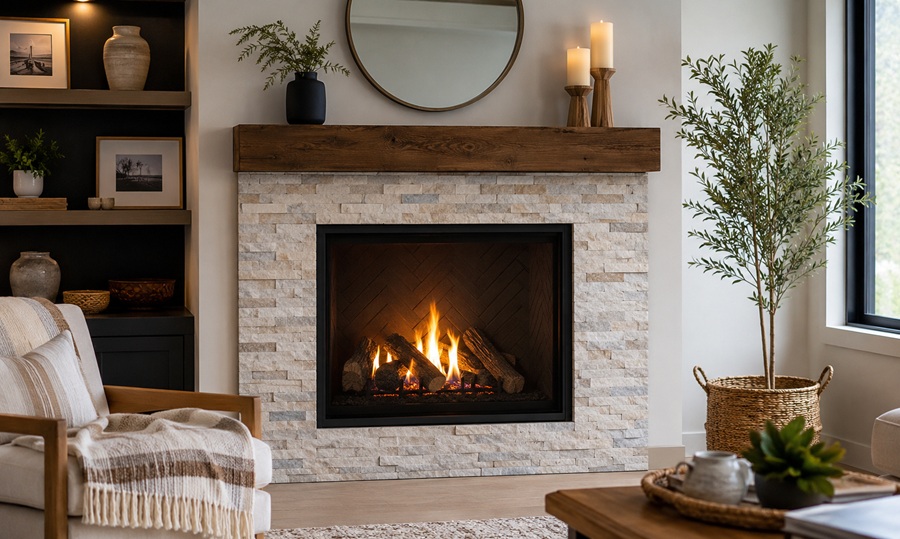
A decorative fireplace is a fireplace-style feature, whether electric, faux, or non-working, installed for visual impact rather than as a primary heat source. They’re popular in homes without existing chimneys because they add the warmth and focal point of a traditional fireplace without the cost and complexity of venting. This guide clears up common myths about decorative fireplaces and covers styling ideas to help the feature look intentional rather than obviously fake.
Common Myths and Facts About Decorative Fireplaces
| Myth | Fact |
| Decorative fireplaces always look cheap or fake | High-quality electric and faux designs with real materials can look nearly indistinguishable from a working fireplace |
| You need a chimney for any fireplace feature | Electric, ventless, and purely decorative surrounds require no chimney or venting at all |
| Electric fireplaces don’t produce real heat | Many electric fireplaces include a heater function alongside the flame effect, offering supplemental warmth |
| Decorative fireplaces are only for renters or temporary homes | Many homeowners choose them permanently as a design feature, especially in additions or rooms without existing chimney access |
| All faux fireplaces require professional installation | Freestanding and many electric inserts are plug-and-play with no installation required |
Types of Decorative Fireplaces
Electric fireplaces: Use LED technology to simulate flames, often with a built-in heater option. Available as inserts, wall-mounted units, or freestanding units styled like a traditional stove.
Faux fireplace surrounds: A mantel and surround built around an empty firebox opening, sometimes with candles or decorative logs inside instead of any flame effect.
Freestanding decorative fireplaces: Standalone units, often on wheels, that can be placed anywhere in a room without any installation, popular for renters or those wanting flexibility.
Ventless (gel or ethanol) fireplaces: Use gel fuel or bioethanol to produce a real, small flame without requiring a chimney, offering genuine fire in a space without traditional venting.
Styling the Mantel and Surround
A well-styled mantel balances symmetry with a few personal touches rather than either extreme. A common approach layers a large piece of art or a mirror leaning against the wall, flanked by candlesticks or small vases of varying heights, with a few books or small objects filling in the gaps. Avoid overcrowding the mantel, since a cluttered surface competes with the fireplace itself as a focal point rather than complementing it.
Seasonal styling, like swapping in greenery for winter or lighter florals for spring, is one of the easiest ways to keep a decorative fireplace feeling fresh throughout the year without a full redesign.
Building a Fireplace Accent Wall
Pairing a decorative fireplace with a textured or colored accent wall amplifies its impact as a focal point. Shiplap, stone veneer, and vertical wood slats are all popular choices for surrounding a decorative fireplace, giving it more visual weight even without an actual working hearth. A painted accent wall in a deep, saturated color also works well, particularly when paired with a white or natural wood mantel for contrast.
Cost Comparison: Decorative vs. Working Fireplace
Decorative fireplace options range from under $200 for a basic freestanding electric unit to $2,000 or more for a built-in electric insert with a custom surround. A traditional wood-burning or gas fireplace installation, by comparison, typically costs $5,000 to $15,000 or more once venting, permits, and professional installation are factored in. This cost difference is a major reason decorative fireplaces have grown popular, particularly in homes where adding a chimney isn’t feasible or desired.
Safety Considerations for Decorative Fireplaces
Even without a real flame, decorative fireplaces have some safety considerations worth keeping in mind. Electric fireplaces with a heater function need adequate clearance from furniture and curtains, similar to any space heater. Ventless gel or ethanol fireplaces produce actual combustion byproducts and require some ventilation in the room, so it’s important to follow manufacturer guidelines on room size and airflow. Always choose units with safety certifications and avoid placing any decorative fireplace, even a purely cosmetic one, in a way that blocks emergency exits or walkways.
Design Ideas by Room Style
Modern living room: A linear electric fireplace insert with a minimal frame, set into a floating media wall or surrounded by simple shiplap.
Traditional living room: A classic wood mantel surround with an electric or faux insert, paired with symmetrical mantel styling and warm color tones.
Bedroom: A smaller freestanding or wall-mounted electric fireplace positioned opposite the bed adds ambiance without requiring a full renovation.
Home office: A compact electric insert built into a bookshelf wall combines warmth with functional storage in a smaller footprint.
Choosing the Right Placement for a Decorative Fireplace
Placement affects both how well a decorative fireplace functions as a focal point and how practical it is day to day. In a living room, centering the unit on the main viewing wall, opposite the primary seating area, makes it a natural focal point without competing with a television for attention. If the room also has a TV, offsetting the two rather than stacking them helps each element read as intentional rather than crowded together.
In smaller rooms, a corner placement can work well for a freestanding or wall-mounted electric unit, freeing up the main wall for other furniture or storage. Whatever the placement, leave enough clearance from any nearby furniture, particularly for units with a heater function, to avoid safety issues and allow airflow around the unit to circulate properly.
Built-In vs. Freestanding Decorative Fireplace Installation
Built-in electric fireplace inserts are installed into a wall opening or custom-built surround, giving a more seamless, permanent look similar to a traditional fireplace. This option typically requires basic carpentry to frame the opening and often benefits from professional installation, particularly if it involves cutting into an existing wall. Freestanding units, by contrast, require no installation at all beyond plugging them in, making them the better choice for renters or anyone who wants the flexibility to move or replace the unit later without any construction involved.
Frequently Asked Questions
Do decorative fireplaces need a chimney?
No, electric and purely decorative fireplace surrounds don’t require a chimney or venting, though ventless gel or ethanol models do need some room ventilation per manufacturer guidelines.
Can an electric fireplace actually heat a room?
Many electric fireplaces include a built-in heater capable of warming a small to medium room, though the flame effect itself can also be run without heat during warmer months.
Are decorative fireplaces safe?
Yes, when used according to manufacturer guidelines, though electric models with a heater function need normal clearance from flammable materials, and ventless models require adequate room ventilation.
How much does a decorative fireplace cost?
Costs range from under $200 for a basic freestanding electric unit to $2,000 or more for a built-in insert with a custom mantel surround.
